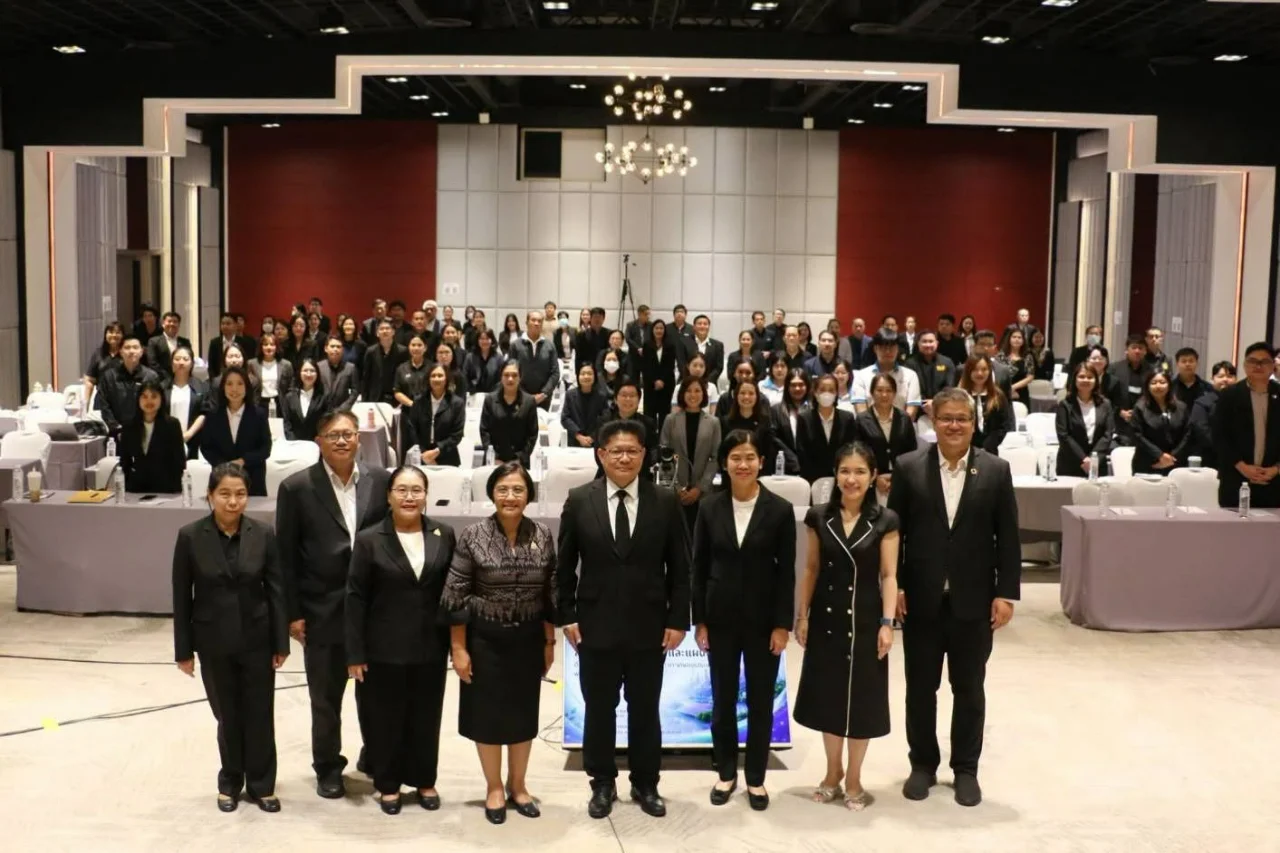
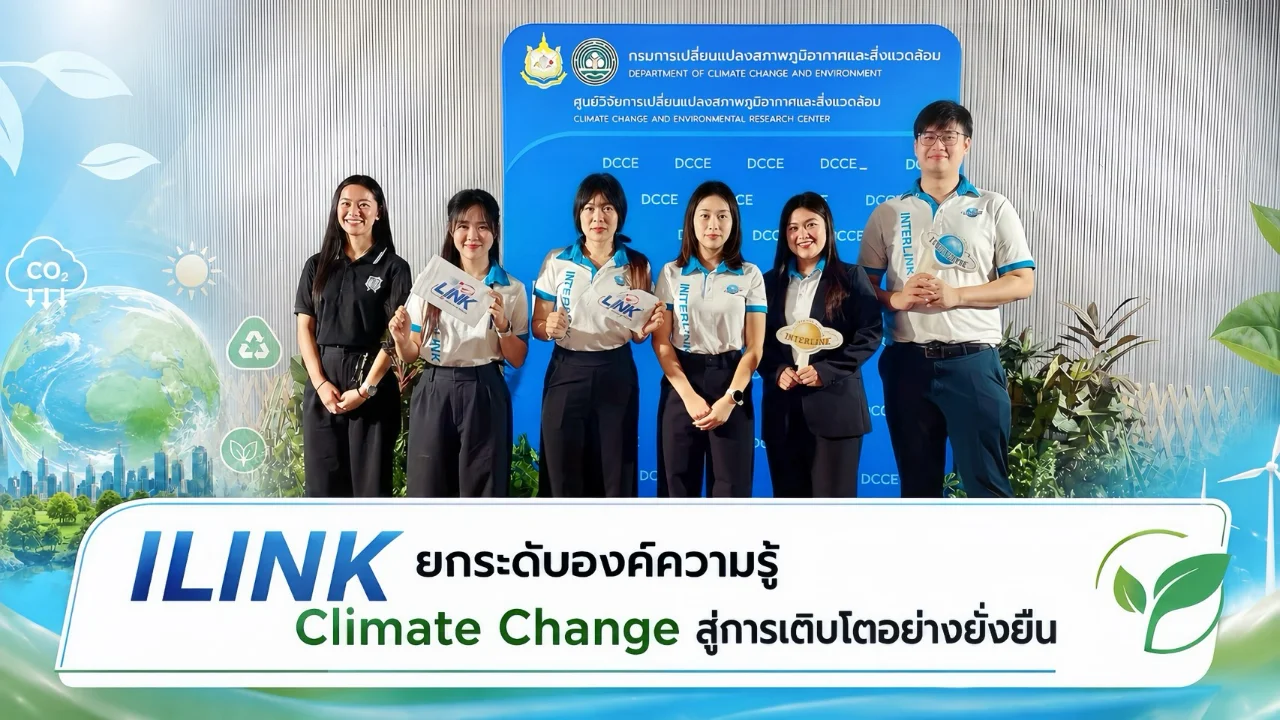
ILINK attended a seminar on Climate Change to gain a national perspective.
ILINK and Interlink Foundation participated in the seminar on the dissemination of the framework and research plan on climate change of the country in 2027-2025. Provide a view on the direction of research and innovation on Climate Change while taking knowledge into consideration and enhancing sustainability management practices in accordance with the organizational context and future changes.
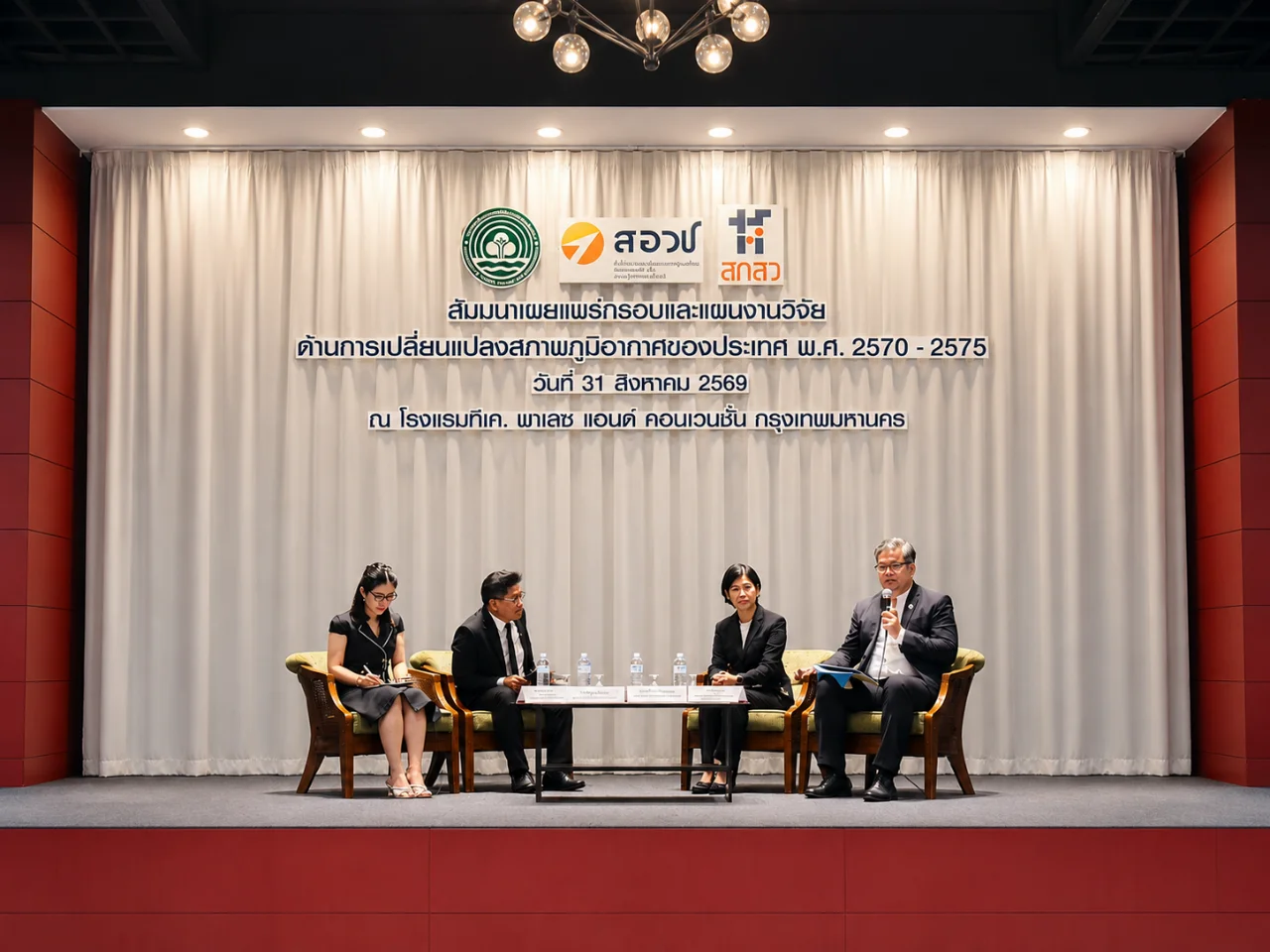
On August 31, 2026 ILINK and the Interlink Foundation sent representatives to listen. The seminar project disseminates the framework and research plan for climate change in the country in 2027-2025. at TK. Palace Hotel & Convention Bangkok
This hearing reflects the importance that the organization has given to Continued learning and monitoring of Climate Change knowledge Specifically, the research direction, technology, and approach to climate change are linked to environmental management, risk management, adaptability, and long-term business growth.
Within the event, there was a presentation on the topic “Research and the Future of Thailand Under a Boiling Earth: Key Mechanisms for Achieving Climate Change Goals” with a discussion on “The research problem of the future fills the knowledge gap to drive the country.” It gives participants the opportunity to hear perspectives from climate change, science, research, innovation and sustainable development agencies.
3 Key Approaches from Climate Change to ESG
Through an analysis of the country's climate change research framework and roadmap for 2027-1975 and scientific research and innovation direction, three key approaches can be seen that can be applied by the business sector in connection with ESG development.
01 | Mitigation — Reduce Emissions to a Low Carbon Economy
Emphasis is placed on reducing greenhouse gases and transitioning to a low-carbon economy through increased energy efficiency, use of clean and renewable energy, waste management based on circular economy concepts, as well as increasing greenhouse gas uptake with a nature-based approach.
For the business sector, such ideas can be used to develop guidelines. Reduce operational emissions, increase energy efficiency, and make good use of resources. Consider opportunities to bring technology and innovation to support the transition to low-carbon business operations.
02 | Resilience & Adaptation — Building Immunity to Change
Climate change is not only about reducing greenhouse gas emissions, but also about preparing for impacts and potential disasters, with a focus on climate data, spatial risk assessment, water management, and early monitoring and warning systems.
Such knowledge can be extended to Manage Climate Change Risks and Organizational Resilience Preparing for business continuity, workforce safety, as well as considering risks that may affect supply chains and stakeholders.
03 | System Research — Enhancing Management with Systematic Data and Mechanisms
Another important issue is the creation of interconnected mechanisms. Knowledge, information, policy, technology and investment together to move from problem recognition to systematic action. Within the seminar, there was also an exchange on the topic “Funding for Impact: Allocate research funding to meet Climate Change needs” It reflects the importance of bringing research and innovation to produce practical results.
For business organizations, this concept can be applied to Enhance the environmental information system, monitoring and evaluation of risk management, as well as transparent and verifiable communication of sustainability information. To support data-driven business decisions
From “learning” to “applying”
ILINK focuses on bringing external knowledge to be analyzed and considered in order to fit the context of the organization by focusing on linking Climate Change issues to the implementation of Environmental, Social and Governance Systematic
The knowledge gained from this hearing can therefore be used as supporting information. Review approaches to reducing environmental impacts, assessing risks and opportunities from Climate Change, strengthening workforce and supply chain readiness, and developing information systems and sustainability monitoring.
At the same time, the Interlink Foundation is able to take a view on climate change and consider ways of working to benefit society and communities, reinforcing the concept of creating value that connects organizations, society and the environment.
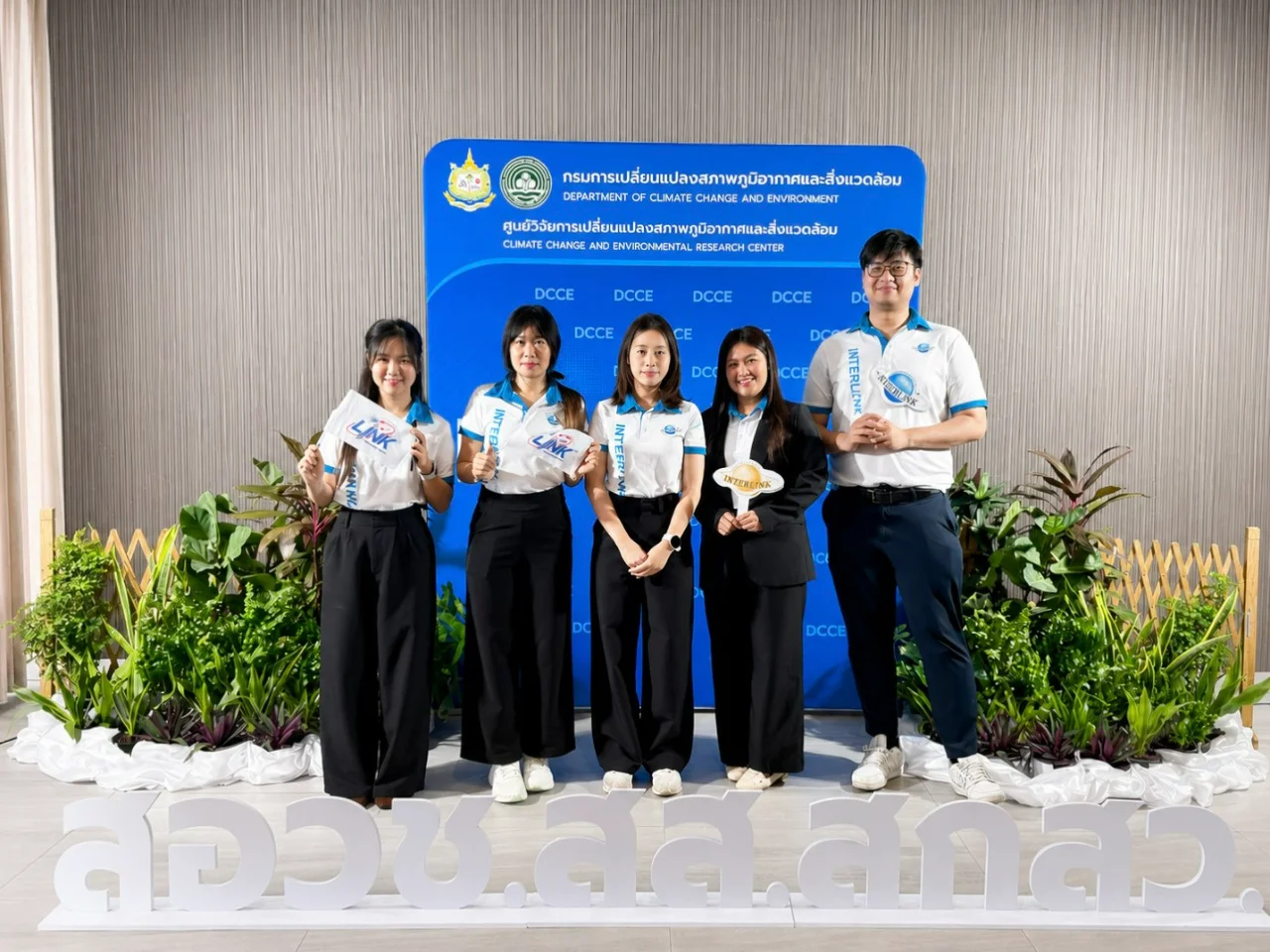
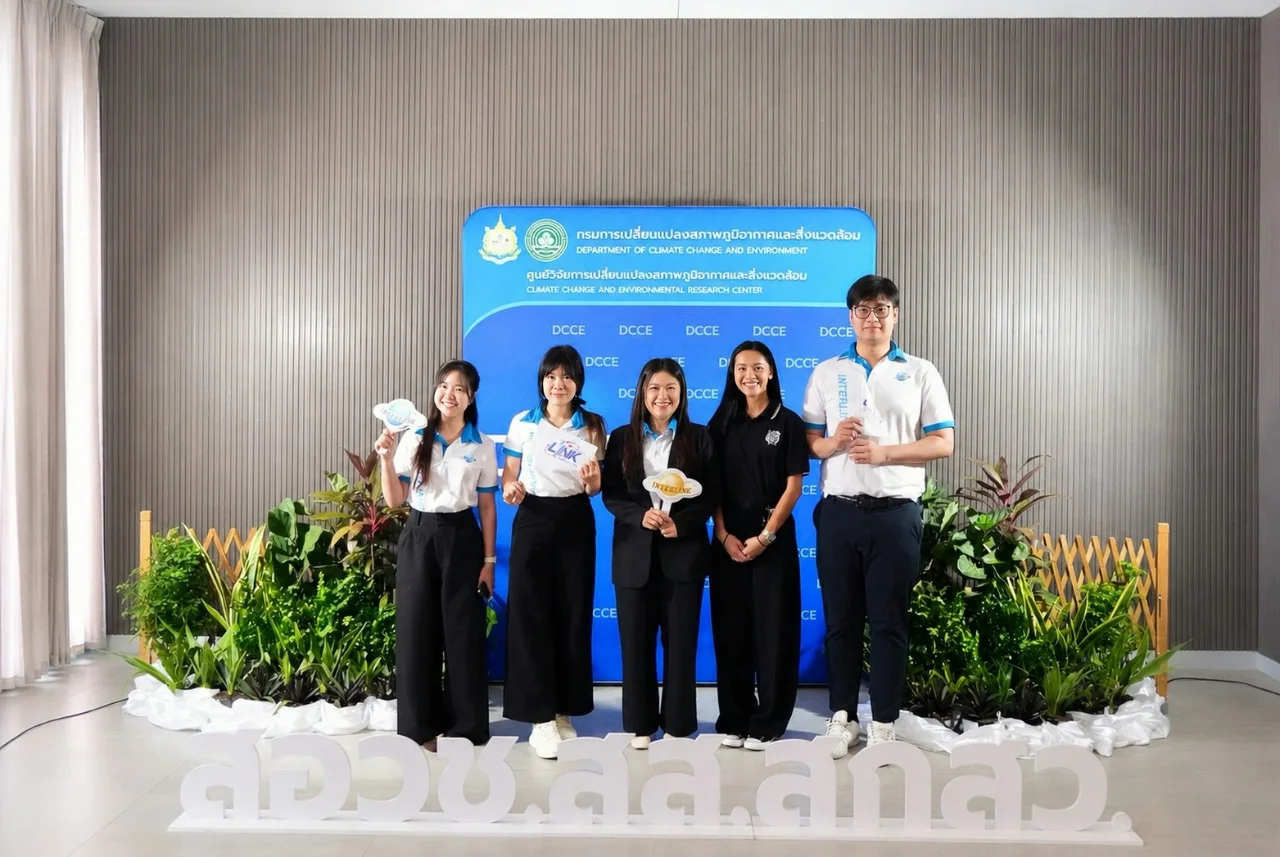
ILINK and the Interlink Foundation are committed to promoting continuous learning and knowledge development, so that tackling Climate Change does not stop with awareness, but can lead to the development of an operational approach that builds Shared value to business, society and the environment and support stable and sustainable growth in the long run.